 Skip to content
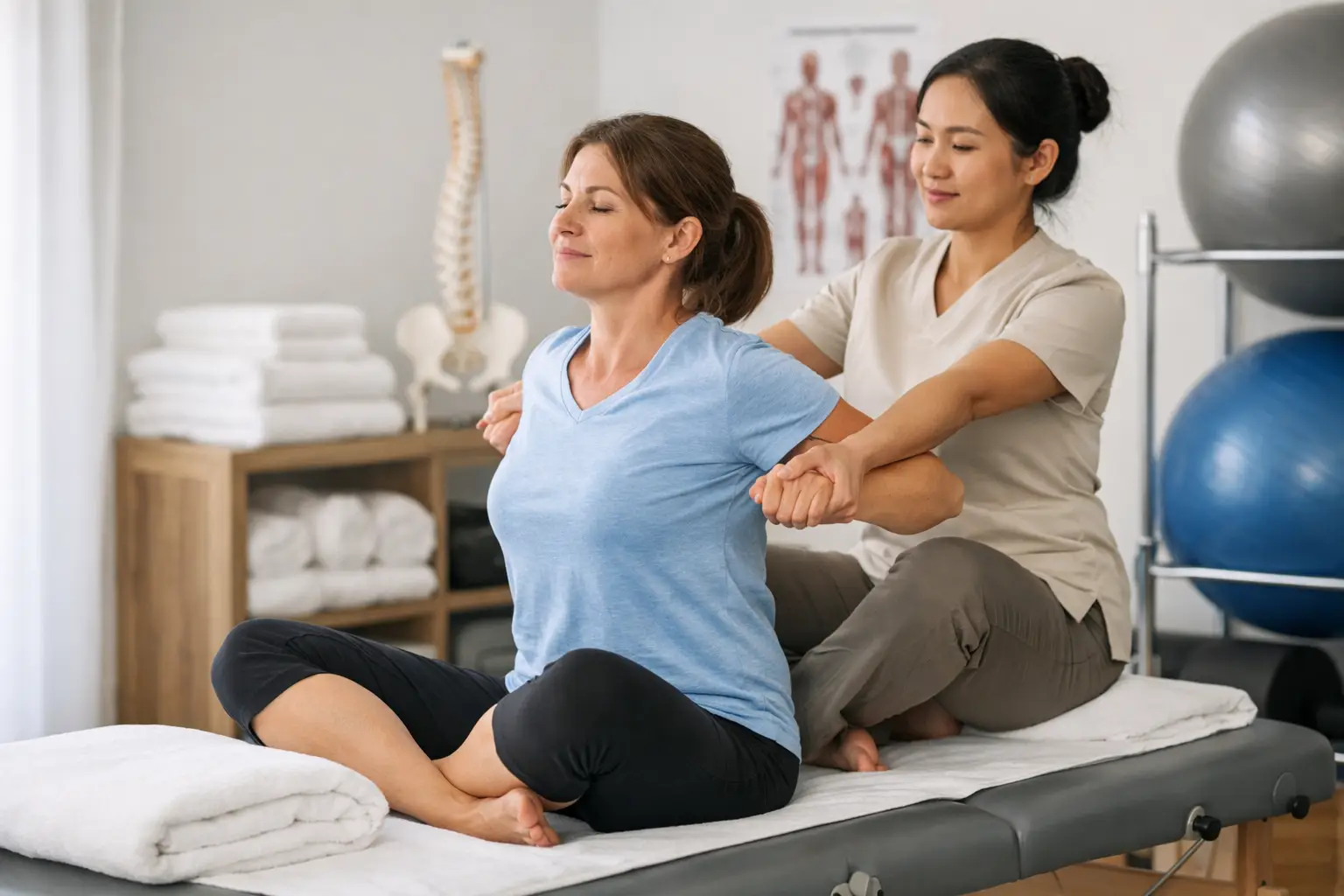
A back that feels tight when you get out of the car, aches after a day at your desk, or pulls during a workout can affect far more than your comfort. It can change how you sit, sleep, breathe, and move. Thai massage for back pain offers a hands-on way to address the muscular tension and movement restrictions that often contribute to that daily discomfort.
Rather than focusing only on the sore spot, traditional Thai massage considers the connected areas that influence your back: the hips, glutes, legs, shoulders, chest, and neck. With guided stretching, steady pressure, and a session tailored to your body, it can help you feel looser, more balanced, and more comfortable in motion.
Why Back Tension Rarely Stays in One Place
Back discomfort often has a pattern. Long hours of sitting can leave the hip flexors and chest feeling shortened while the upper back and low back work harder to hold you upright. Physical jobs can create repetitive strain through lifting, bending, reaching, or standing. Active people may notice tightness after running, soccer, strength training, or a demanding week of workouts.
The location of discomfort is not always the only area that needs attention. Tight glutes may limit hip movement and leave the low back compensating. Stiff shoulders and a rounded upper body can create tension across the neck and upper back. When the body is moving around a restriction, one area can become overworked.
This is why a thoughtful massage session begins with listening. A skilled therapist can ask where you feel tightness, what movements aggravate it, and what you want to be able to do more comfortably. The goal is not a one-size-fits-all routine. It is to focus the session where your body needs support.
How Thai Massage for Back Pain Works
Traditional Thai massage combines assisted stretching with acupressure-style pressure along muscles and soft tissue. It is commonly performed fully clothed on a raised table, allowing the therapist to guide the body through comfortable positions and stretches.
For back tension, that may mean working through the legs and hips before spending time on the low back, or releasing the chest and shoulders to help the upper back settle. The therapist may use hands, palms, thumbs, forearms, or elbows to apply controlled pressure. The pressure should feel purposeful, not rushed, and it can always be adjusted.
The stretching component is one of the qualities that makes Thai massage especially helpful for people who feel stiff as well as sore. Gentle, assisted movements can encourage range of motion through the hips, spine, shoulders, and legs without asking you to force a stretch on your own. Many clients appreciate that balance of targeted pressure and supported movement.
It is not just about pressure
More pressure is not automatically better. Muscles that have been guarded for weeks or months may respond more positively to steady, appropriate pressure paired with slow stretching and time to relax. A therapist should work within your comfort level and check in throughout the session.
Some people want focused work on a stubborn knot between the shoulder blades. Others need a gentler approach because their whole back feels sensitive after a stressful week. Both experiences are valid, and the right treatment depends on how your body feels that day.
Benefits You May Notice After a Session
Every body responds differently, but many people seek Thai massage because they want practical changes: less muscle tightness, easier movement, and a calmer sense of physical tension. After a well-matched session, you may notice that turning your head, reaching overhead, standing upright, or bending to tie your shoes feels more comfortable.
Massage can also support circulation in worked areas and give overactive muscles a chance to relax. When tension eases across the hips, glutes, shoulders, or chest, the back may no longer feel like it is carrying all the effort alone. That can be particularly welcome for desk workers, tradespeople, and active adults managing recurring tightness.
There is also value in slowing down. Stress often shows up physically through raised shoulders, shallow breathing, clenched muscles, and poor sleep. A quiet, attentive session gives the nervous system time to settle while the body receives focused care. The result may be both physical relief and a clearer sense of ease.
Choosing the Right Massage Style for Your Back
Traditional Thai massage is a strong option when stiffness, limited flexibility, and full-body tension are part of the picture. Because it uses assisted stretching and does not require oil, it can suit clients who prefer to remain fully clothed while receiving focused bodywork.
A Thai combination Swedish massage may be a better fit if you want the movement-based benefits of Thai techniques along with longer, flowing massage strokes. Swedish oil massage can be ideal for relaxation-focused muscular work, especially when you want direct attention on the back, neck, and shoulders.
For deep, lingering tightness, hot stone massage may add soothing warmth that helps muscles relax before hands-on work. Cupping, when appropriate for your comfort and goals, can also be incorporated into a Thai combination oil massage to address areas that feel particularly restricted. The best choice depends on your sensitivity, preferences, activity level, and where you feel tension most.
At Warin Thai Massage in St. Catharines, sessions are personalized rather than performed from a fixed script. Joy can adapt the pace, pressure, and techniques to focus on the areas that matter most to you, whether that is a tight low back after work, shoulder tension from the computer, or hip stiffness affecting your training.
What to Expect at Your First Appointment
You do not need to arrive knowing exactly which muscles are causing the problem. Simply be ready to describe what you are feeling. Mention where the discomfort starts, whether it travels, what makes it worse, how long it has been present, and what type of pressure usually feels comfortable.
For a traditional Thai session, wear loose, comfortable clothing that lets you bend and stretch easily. Your therapist will guide you through the process and let you know what to expect before each position or stretch. Communication matters throughout the treatment. If a stretch feels too strong, pressure feels too intense, or you need a different position, say so right away.
A massage session should leave you feeling cared for, not pushed beyond your limits. It is normal to feel relaxed or mildly tender after focused work, especially if an area has been very tight. Drinking water, taking an easy walk, and avoiding a hard workout immediately afterward can help you pay attention to how your body responds.
When a Different Approach May Be Needed
Massage can be a valuable part of managing everyday muscular tension, but it is not a substitute for medical assessment. If back pain follows a significant fall or accident, comes with unexplained numbness or weakness, or is severe and unusual for you, seek guidance from an appropriate healthcare professional before booking bodywork.
It also helps to set realistic expectations. One session may bring noticeable relief, but recurring tension often reflects ongoing habits, workload, training demands, or stress. Regular sessions, paired with comfortable movement breaks and attention to posture, may provide more lasting support than waiting until discomfort becomes overwhelming.
Your back does a great deal for you every day. Giving it focused care can make everyday movements feel lighter and more natural. Book your session online with Warin Thai Massage and take a calm, practical step toward feeling better, moving better, and living better.
Leave a Reply