 Skip to content
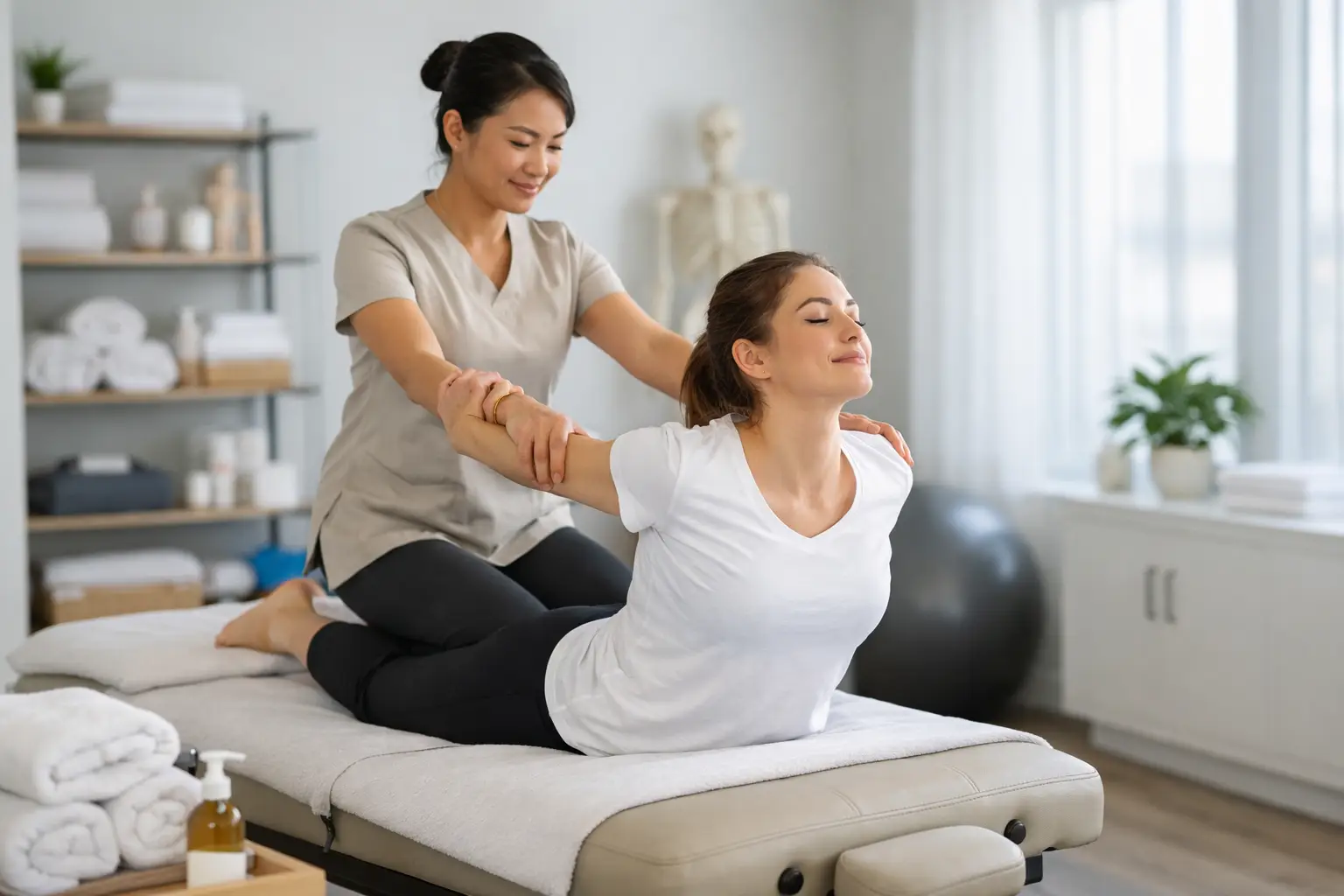
A desk chair can leave your hips feeling locked by midafternoon. A long shift, hard training session, or repetitive lifting can make the shoulders, hamstrings, and lower back feel just as restricted. Thai assisted stretching for flexibility offers a practical way to address that tight, heavy feeling with guided movement that meets your body where it is.
Unlike a fast stretch you force yourself to hold, Thai massage uses the therapist’s hands, body positioning, and steady pressure to help muscles relax as joints move through a comfortable range. The goal is not to push farther for the sake of it. It is to create more ease in the way you bend, reach, walk, train, and recover.
What Thai assisted stretching feels like
Traditional Thai massage is performed fully clothed, usually on a raised massage table in a calm studio setting. Your therapist supports a limb or section of your body, then guides it through slow, purposeful movements. A session may include stretches for the hips, legs, chest, shoulders, arms, and back, along with focused acupressure on areas carrying excess tension.
Many people describe the feeling as a satisfying combination of being stretched and being supported. You do not have to work to hold a difficult position or guess whether your alignment is right. That support can make the experience more comfortable than trying to stretch a tight area alone after a demanding day.
The intensity should be adjustable. A productive stretch may feel like a broad pull or gentle pressure, but it should not feel sharp, pinching, or alarming. Clear communication helps your therapist tailor the pace and depth to your comfort level.
Why assisted stretching can improve flexibility
Flexibility is not only about how far you can reach toward your toes. It also affects how freely you move through normal activities: turning to check a blind spot, reaching overhead, squatting to pick something up, or getting out of the car without feeling stiff.
When muscles are overworked or held in one position for hours, the body often responds by guarding the area. This can make movement feel limited even when you know you need to move more. Gentle assisted stretching pairs movement with relaxation, giving tense tissues time to soften rather than asking them to suddenly lengthen under force.
Thai techniques also allow the therapist to work with angles that are difficult to create on your own. For example, one hand can stabilize the pelvis while the leg is guided through a hip stretch. That stability matters. It helps direct the stretch more precisely and may reduce the urge to compensate by twisting, holding your breath, or tightening somewhere else.
Results vary by person. Someone who sits all day may notice their chest and hip flexors feel less restricted after one session, while an athlete with ongoing training demands may benefit most from regular bodywork alongside a sensible mobility routine. Flexibility tends to respond best to consistent, comfortable movement rather than one aggressive session.
Thai assisted stretching for flexibility and everyday pain patterns
Tightness rarely stays neatly contained in one spot. Stiff hips can change how the legs and lower back feel. Rounded shoulders can leave the neck working harder. A therapist can look at the way tension connects across the body and adjust the session around the areas that need attention.
For desk work and long drives
Hours of sitting often leave the front of the hips, chest, and shoulders feeling shortened, while the upper back becomes tired from holding posture. Thai stretching can include supported hip opening, chest expansion, shoulder movement, and gentle rotation. These techniques are useful when your body feels compressed after screens, meetings, or time behind the wheel.
For physically demanding work
People who lift, stand, bend, or repeat the same motions throughout the day may carry fatigue in the legs, glutes, back, forearms, and shoulders. Assisted stretches can be combined with pressure work to help reduce the sense of muscular heaviness. The session can focus on restoring comfortable movement without turning recovery into another exhausting task.
For active people and athletes
Training often creates a familiar pattern: strong muscles that are also tired, guarded, or limited in certain directions. Thai massage can support recovery by addressing the hips, hamstrings, calves, shoulders, and back in a coordinated way. For runners, soccer players, gym-goers, and other active clients, the best approach depends on training volume and timing. A deeper session may feel great after adequate recovery, while a lighter session may be a better fit close to a competition or especially demanding workout.
What makes Thai stretching different from stretching alone
A home stretching routine still has value. It can help you maintain mobility between appointments and build awareness of the areas that tighten most often. Thai assisted stretching provides something different: attentive feedback, external support, and techniques that adapt as your body responds.
Your therapist can slow down when a muscle is resisting, change the angle when a position feels awkward, or spend more time on a specific concern such as a tight hip, stiff shoulder, or tired legs. That individualized approach is especially helpful when one side of the body feels noticeably different from the other.
The treatment is also not a passive shortcut that replaces your own movement. Think of it as a reset and a guided opportunity to move more freely. Maintaining that progress may involve walking, strength training, regular breaks from sitting, hydration, sleep, and gentle mobility work that fits your routine.
How to get more from your session
Arrive in comfortable, flexible clothing that allows easy movement. Because traditional Thai massage is performed fully clothed, leggings, athletic pants, shorts, and a comfortable top are all good choices. Try not to schedule your session when you need to rush out the door, since a few calm minutes afterward can help you notice how your body feels.
Before the treatment begins, share the areas that feel most restricted and describe what movements bother you most. Saying “my hips feel tight after driving” gives useful context, but saying “my right hip catches when I step out of the car” can help guide the focus even more. Let your therapist know if you have a recent injury, sensitivity, or a movement that does not feel safe or comfortable.
During the session, breathe normally and speak up early if the pressure or stretch is too strong. Thai massage works best as a partnership. Relaxing into a position is easier when you know that the therapist will respond to your feedback.
Afterward, it is common to feel lighter, more open, or pleasantly relaxed. Some people also notice mild tenderness, particularly when a very tight area has received focused work. Gentle movement and paying attention to how your body responds can help you choose the right pace for the rest of the day.
A personalized approach in St. Catharines
At Warin Thai Massage, each session is shaped around what your body needs that day. Traditional Thai techniques can stand on their own or be thoughtfully combined with Swedish massage, oil massage, hot stone work, or cupping when those options better match your goals for relaxation, muscle tension, and mobility.
Whether you are managing the effects of desk work, preparing for a more active week, or simply want to move with less restriction, assisted stretching can be a supportive place to start. Book your session online and give your body the attentive, comfortable movement it has been asking for.
Leave a Reply