 Skip to content
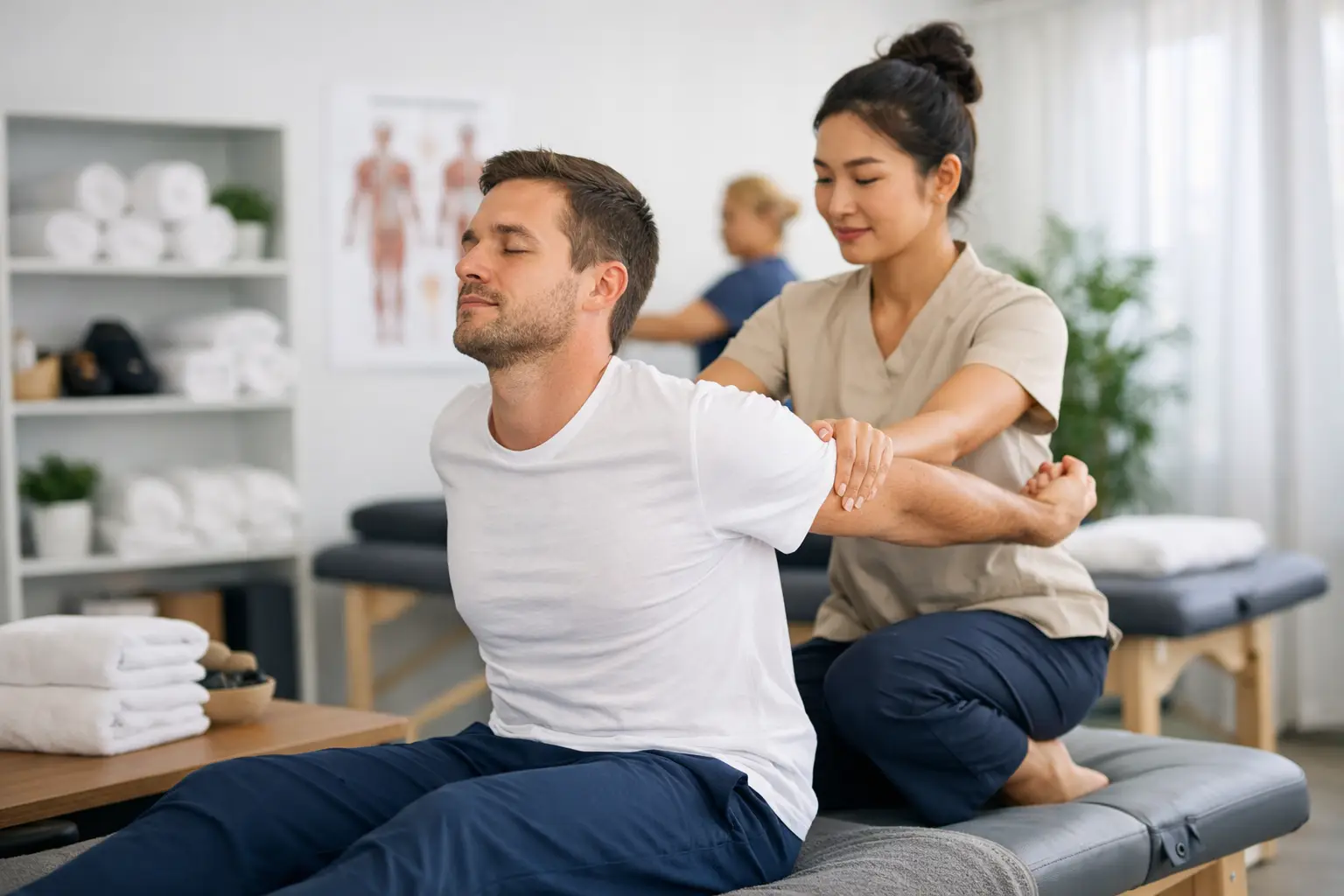
A Thai massage experience can feel very different from the massage many people picture. Rather than simply lying still while muscles are worked with oil, you are guided through supported stretches, steady pressure, and purposeful movement. For people carrying tension from desk work, physical jobs, training, or long drives, that combination can create a noticeable sense of space and ease through the back, shoulders, hips, and legs.
Traditional Thai massage is both calming and active. Your therapist works with your comfort, your flexibility, and the areas that need the most attention, so the session is never about forcing a stretch or following the same routine for every body.
What Happens During a Thai Massage Experience
A traditional Thai massage session is typically performed fully clothed on a raised massage table. Comfortable, flexible clothing is best because the treatment includes assisted movement. You will not need oil for this style of massage, although an oil-based combination treatment is an option for clients who prefer it.
Before the session begins, your therapist will ask how you are feeling and what you would like to address. Perhaps your neck feels tight after computer work, your hips feel restricted after soccer, or your legs are heavy after standing all day. Sharing these details helps shape the session around your priorities.
During treatment, your therapist may use hands, palms, thumbs, forearms, and elbows to apply measured pressure to tight muscle areas. They may also guide your arms, legs, and torso through gentle, controlled stretches. These movements are supported by the therapist, which means you can relax into them instead of trying to do the work yourself.
The pace is intentional. Some moments feel deeply still as pressure is held over a tense area. Others involve slow movement that helps the body feel less compressed and more mobile. Many clients notice that their breathing naturally becomes slower as the session progresses.
The Difference Between Thai and Swedish Massage
Both Thai and Swedish massage can help reduce muscle tension and encourage relaxation, but the experience is distinct.
Swedish oil massage is often the better fit when you want long, flowing strokes and direct work on sore muscles using massage oil. It can be especially soothing when your body feels generally fatigued or when you would rather remain still throughout the treatment.
Thai massage emphasizes assisted stretching, acupressure-style pressure, and movement. It can be particularly helpful for clients who feel stiff through the hips, legs, chest, shoulders, or lower back and want to focus on range of motion as well as relaxation. Because it is performed clothed, it is also a comfortable choice for many first-time massage clients.
A Thai-Swedish combination brings elements of both approaches into one personalized session. Your therapist can use traditional Thai techniques to address mobility and tightness, then incorporate Swedish massage where slower, oil-based muscle work would feel most beneficial. It depends on what your body needs that day.
What Thai Massage May Feel Like in Your Body
The pressure in Thai massage should feel productive, not alarming. You may feel a tender sensation when your therapist works through a tight shoulder, glute, calf, or upper-back muscle. You may also feel a stretch in areas you did not realize were restricted, especially through the hips and hamstrings.
Good communication matters throughout the session. If pressure feels too strong, a stretch feels too deep, or you need extra support in a certain position, say so. An attentive therapist will adjust. The goal is to help your body release tension gradually, not to push past your comfort level.
After a session, people often describe feeling lighter, looser, and more aware of how they are standing or moving. Some feel calm and sleepy, while others feel refreshed and energized. If you have been holding a lot of tension, mild tenderness can occur afterward, much like the feeling after unfamiliar activity. Drinking water, taking an easy walk, and allowing yourself a quieter evening can be helpful.
Why Assisted Stretching Matters
When muscles feel tight, everyday movement can become less comfortable. You may turn your head carefully while driving, avoid bending to pick something up, or feel your stride shorten after long hours on your feet. Assisted stretching addresses this feeling of restriction by moving the body slowly through comfortable ranges of motion.
Unlike stretching on your own, Thai massage allows you to soften into the movement while your therapist provides support and control. This can make it easier to relax areas that tend to brace, such as the hip flexors, lower back, chest, and shoulders.
For active clients, this may support recovery between training sessions and help maintain flexibility. For desk-based professionals, it can counter some of the stiffness that builds from sitting with rounded shoulders and bent hips. For people in physically demanding work, it can provide focused care for tired legs, back muscles, and hands. Results vary from person to person, but the purpose is always practical: helping you feel more comfortable moving through your day.
Choosing the Right Style for Your Needs
Traditional Thai massage is a strong option if you want a clothed treatment with stretching and focused pressure. If your body feels both tight and sore, a Thai combination Swedish massage may offer a more balanced experience.
Hot stone massage may be appealing when warmth helps your muscles relax. Smooth heated stones can be incorporated into a treatment to create a slower, deeply soothing feel, especially during colder months or after a demanding week. Cupping may also be added to an oil-based Thai combination session when appropriate, offering another way to focus on stubborn areas of muscular tightness.
You do not need to know the perfect service before booking. A clear conversation about your goals, comfort level, and past massage experience gives your therapist a useful starting point. At Warin Thai Massage in St. Catharines, sessions are personalized so the treatment can be adapted to the areas that need care rather than treated as a one-size-fits-all routine.
Preparing for Your First Session
Arrive a few minutes early so you do not begin your massage feeling rushed. Wear loose clothing you can move comfortably in if you are receiving traditional Thai massage. Avoid scheduling immediately after a heavy meal, and let your therapist know about any recent injuries, sensitivities, or movement limitations that could affect your comfort.
It is also helpful to arrive with a simple goal. You might want relief from shoulder tension, easier movement through your hips, recovery support after sport, or simply an hour to reset after a stressful stretch of work. A specific goal helps guide the session, but it is fine if your only goal is to feel better.
A Session Built Around How You Feel
The best Thai massage experience is not defined by how intense it is. It is defined by whether you feel heard, supported, and more at ease in your body afterward. Pressure, stretching, and treatment style should all reflect your needs on that particular day.
If your body has been asking for more room to move and a calmer place to reset, book your session online with Warin Thai Massage. Give yourself the time to feel better, move better, and carry less tension into the days ahead.
Leave a Reply