 Skip to content
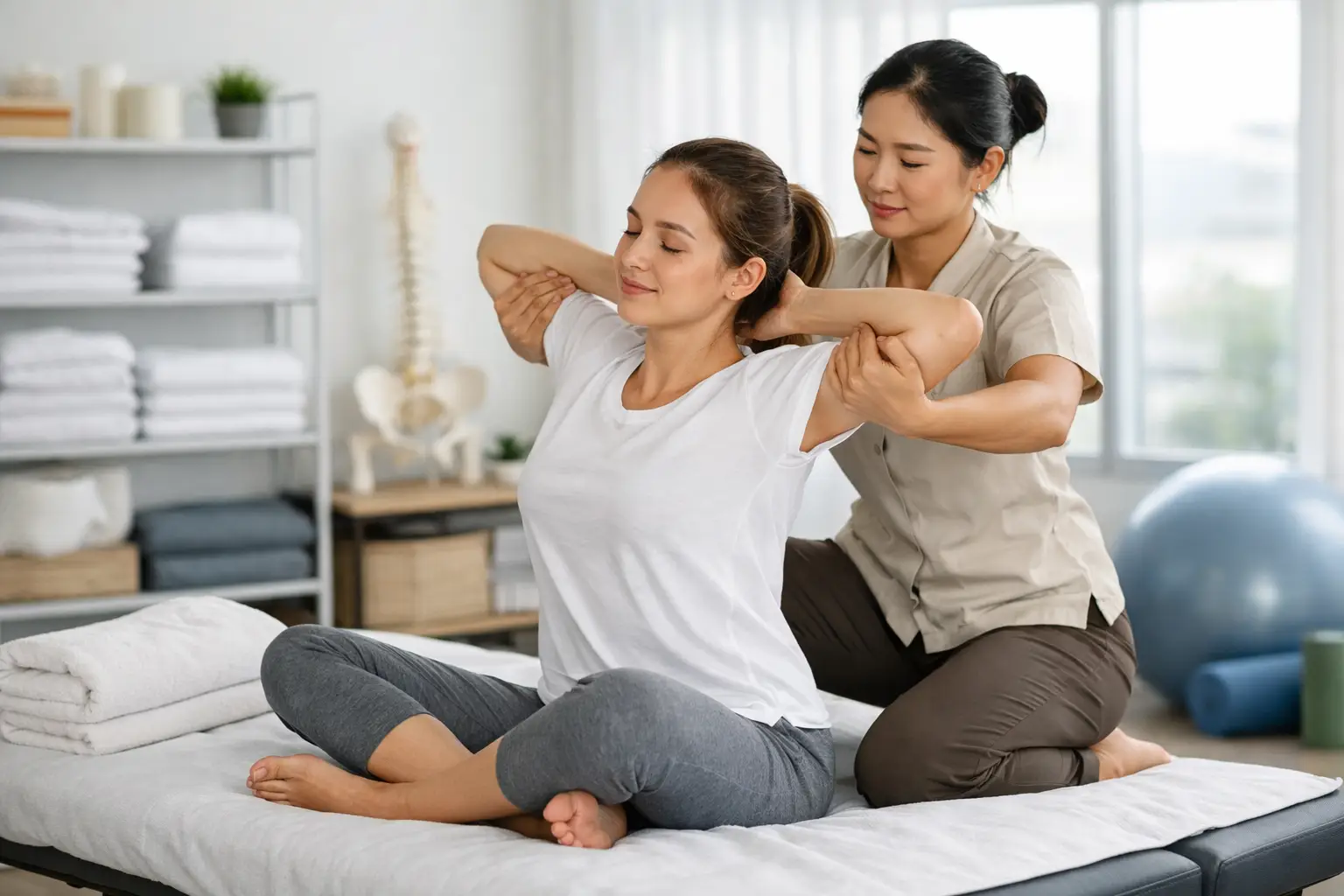
Your first massage should not feel like a test of endurance or a guessing game. This Thai massage first session guide explains what happens before, during, and after your appointment so you can arrive comfortable, communicate clearly, and get the most from your time on the table.
Before Your First Thai Massage Session
Traditional Thai massage is different from a typical oil massage. It uses guided stretches, steady pressure, and acupressure-inspired techniques to address areas that feel tight, tired, or restricted. At Warin Thai Massage, traditional Thai sessions are performed fully clothed on a raised table, so you can move comfortably while receiving focused care.
Wear loose, flexible clothing that allows you to bend your knees, raise your arms, and stretch without feeling restricted. Think comfortable athletic wear, a soft T-shirt, or loose pants. Avoid heavy layers or clothing with bulky zippers, buttons, or belts that may get in the way during table work.
There is no need to prepare perfectly. A normal meal a little while before your appointment is usually more comfortable than arriving very full or very hungry. Give yourself enough time to arrive without rushing, use the restroom if needed, and settle into the quieter pace of the studio.
If you have a particular concern, such as recurring shoulder tension from desk work, tight hips after long drives, tired legs from standing, or stiffness after sports, make a mental note of it before you arrive. Specific details help your therapist shape the session around what you need most.
What Happens When You Arrive
Your first few minutes are for conversation, not just check-in. Your therapist will ask what has been bothering you, where you feel tension, and what you would like to improve. You might be looking for relaxation, but you may also want better movement through your hips, relief from neck and shoulder tightness, or recovery support after a demanding week.
Be honest about your comfort level and previous massage experience. If firm pressure feels helpful, say so. If you are sensitive in certain areas or nervous about stretching, that is equally useful to share. A skilled session is not about applying the same pressure everywhere. It is about adjusting the work to your body, your goals, and how you respond in the moment.
You can also mention if you prefer a traditional fully clothed Thai massage or a treatment that combines Thai techniques with Swedish massage, oil massage, hot stones, or cupping. The best choice depends on your preferences and the type of tension you are carrying. For example, someone who wants assisted stretching and mobility work may prefer traditional Thai massage, while someone craving more gliding massage for back and shoulder tension may enjoy a Thai-Swedish combination.
What Thai Massage Feels Like
Thai massage is often described as active relaxation. Your therapist may use hands, palms, forearms, elbows, and body positioning to apply controlled pressure along tense muscles. They may also guide your arms, legs, or hips through gentle stretches. You do not need to help force a stretch or perform anything correctly. Your job is simply to relax as much as you can and let your therapist guide the movement.
Some pressure can feel intense in tight areas, especially around the upper back, shoulders, hips, calves, and feet. Intense does not need to mean painful. A productive sensation may feel like a deep release, a satisfying stretch, or a tender area gradually softening. Sharp pain, pinching, numbness, or a feeling that makes you tense up is a reason to speak up right away.
Your therapist can reduce pressure, change the angle, spend less time in one area, or use a different technique. This is not interrupting the massage. It is part of creating a session that works for you.
You Stay in Control of the Pace
First-time clients sometimes worry that Thai massage means dramatic stretches or very strong pressure. In reality, the session can be adapted considerably. If your body is stiff, if you are new to massage, or if you simply prefer a gentler approach, the work can begin slowly.
Breathing can make a noticeable difference during assisted stretching. Try not to hold your breath as a stretch begins. A slow exhale often helps your muscles stop bracing, allowing the movement to feel smoother and more comfortable. There is no prize for pushing farther. The goal is better ease of movement, not forcing range of motion.
How to Communicate During Your Session
Clear feedback helps create better results. You do not have to wait until the end to say something. A few simple phrases are enough: “That pressure is good,” “Could you go a little lighter there?” or “My right side feels tighter.”
If you came in with a focused issue, such as tightness between the shoulder blades or soreness through the hips and legs, let your therapist know whether the work is reaching the right area. Tension can refer into nearby muscles, so the place you feel discomfort is not always the only place that needs attention. Your therapist may work around the area as well as directly on it to support more balanced movement.
It is also fine if you do not want to talk much. Many clients relax more deeply with a quiet session. The key is knowing that you can communicate whenever you need to, without feeling awkward or apologetic.
What to Expect After Thai Massage
After a first session, many people feel lighter, calmer, and less restricted through areas that felt tight. Some notice that their posture feels more natural or that it is easier to turn their head, lift their arms, walk, or bend. The experience varies because every body arrives with different stress, activity levels, and patterns of tension.
You may also feel pleasantly tired after deep relaxation or more aware of muscles that were holding tension. Plan a little breathing room after your appointment when possible. Gentle movement, regular meals, and paying attention to how your body feels can help you enjoy the benefits of the session without immediately returning to a rushed schedule.
One appointment can offer welcome relief, but recurring tightness often has recurring causes. Long hours at a desk, repetitive work, demanding training, poor recovery time, and everyday stress can all bring tension back. If a concern has been building for a while, regular massage may be more useful than treating it as a one-time event. Your therapist can help you decide on a pace that feels realistic for your body and schedule.
Choosing the Right Length for Your First Visit
A shorter session can be a good introduction if you have a single area you want addressed or are unsure how your body will respond to Thai massage. A longer appointment gives more time to work without rushing, especially when you have multiple areas of tension such as the neck, back, hips, and legs.
For many first-time clients, more time means a calmer experience. There is room for an unrushed conversation, gradual warm-up, targeted work, and relaxation at the end. Still, the right duration depends on your availability, comfort, and goals. Starting with an appointment that feels manageable is always better than choosing more time than you can comfortably enjoy.
A First Session Built Around You
The value of a first Thai massage is not in how much pressure you can tolerate. It is in feeling heard, moving with greater comfort, and leaving with a clearer sense of what your body responds to. Whether you are managing desk-related tension, recovering from active weekends, or simply need time to reset, personalized bodywork can meet you where you are.
If you are in St. Catharines or the Niagara Region and ready to feel better, move better, and live better, book your session online with Warin Thai Massage. Arrive as you are, share what you need, and let your first appointment be the beginning of a more comfortable routine.
Leave a Reply