 Skip to content
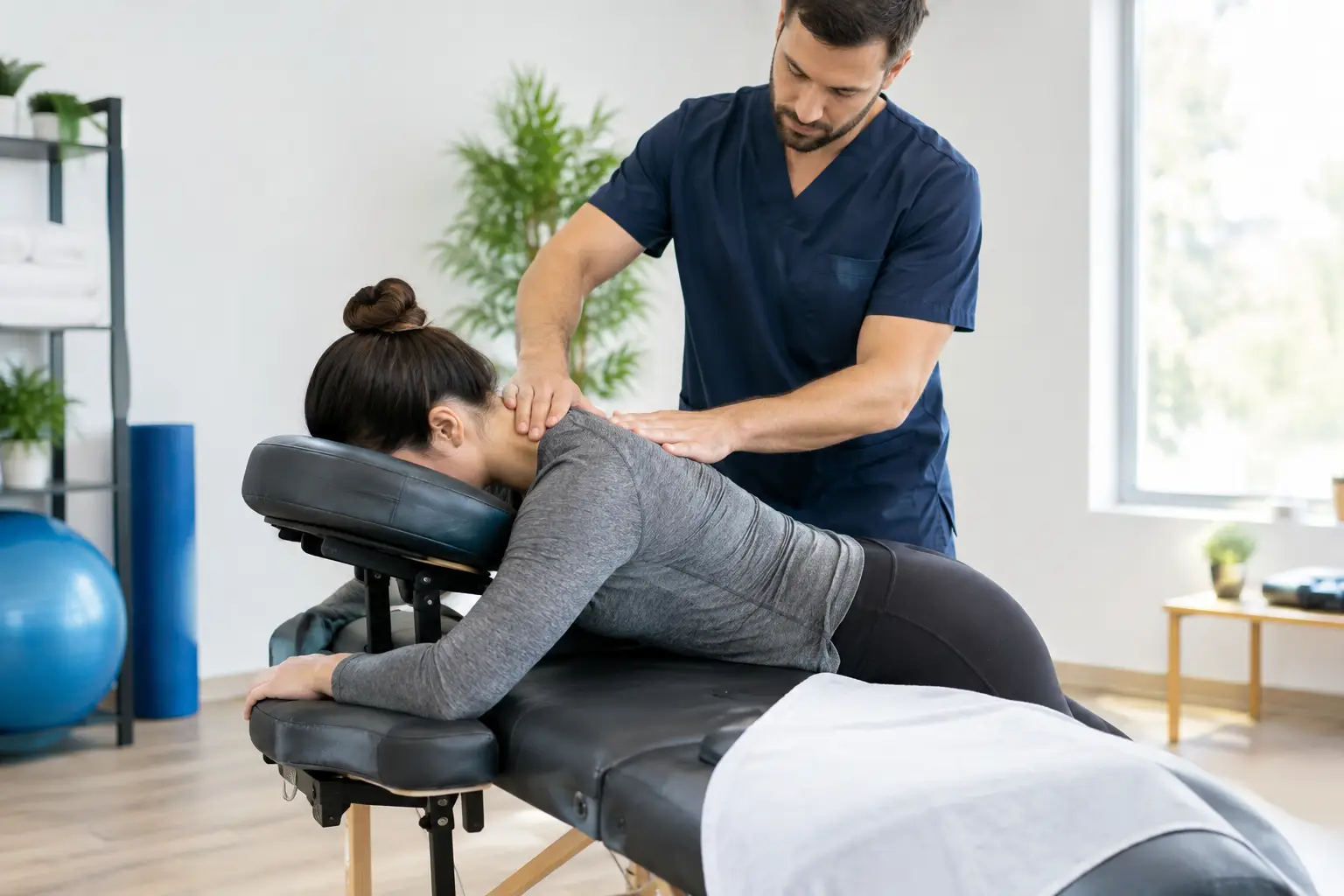
A workday can leave its mark long after the computer is off. Your neck may feel pulled forward, your shoulders may sit close to your ears, and standing up can reveal stiffness through the hips and lower back. Understanding how massage supports desk posture starts with recognizing that posture is not simply about sitting perfectly straight. It is also about whether your muscles can comfortably support movement throughout the day.
Massage cannot replace a well-set-up workstation or the value of regular movement breaks. What it can do is reduce the built-up tension that makes a more comfortable, upright position feel difficult to maintain. For desk workers in St. Catharines and across Niagara, that can mean less end-of-day tightness, easier movement, and a better connection to how the body is sitting and moving.
Why desk work can affect how you sit and stand
The body is made to change positions. At a desk, however, many people spend long stretches with their head angled toward a screen, hands reaching for a keyboard, and hips bent at roughly the same angle for hours. Even a carefully arranged workspace can become uncomfortable when there is little opportunity to move.
Over time, the muscles at the front of the chest and hips may feel shortened or restricted. The upper back, neck, and shoulders often work harder to hold the arms and head in position. Some people notice a dull ache between the shoulder blades. Others feel tightness when turning their head, reaching overhead, or getting up after sitting.
This does not mean one posture is automatically bad and another is perfect. Bodies vary, workstations vary, and so do the demands of each job. The concern is usually not a single sitting position. It is staying in that position long enough that muscle tension, fatigue, and limited mobility begin to affect comfort.
How massage supports desk posture and daily comfort
Massage works on the soft tissues that can become overworked during a desk-heavy routine. With focused pressure, movement, and stretching, a session can help calm areas that feel guarded and tight. When those areas move more freely, it may be easier to sit with the shoulders relaxed, stand taller without forcing it, and change positions before discomfort builds.
Releasing shoulder and neck tension
When the arms stay forward at a keyboard, the upper shoulders and muscles around the neck often take on more work than they should. That is why a desk day can lead to a heavy, tight feeling at the base of the neck or across the tops of the shoulders.
Targeted massage can ease this muscular tension and encourage circulation through the area. Rather than trying to pull the shoulders back all day, clients often find it easier to let them settle into a more natural position after the surrounding muscles have had a chance to relax.
Creating more room through the chest and upper back
A forward-reaching work position can make the front of the chest feel tight while the upper back feels tired. Thai massage is especially useful here because it combines hands-on pressure with assisted stretches. These stretches can gently encourage movement through the shoulders, chest, and upper back without asking you to force a difficult position on your own.
Improved comfort in these areas may make reaching, turning, and sitting upright feel less restricted. The goal is not to hold a rigid posture. It is to give your body more options.
Addressing hip and lower-body stiffness
Desk posture is not only a neck-and-shoulder issue. Sitting keeps the hips bent and can leave the glutes, hip flexors, thighs, and lower back feeling stiff. When the hips do not feel comfortable, people may shift their weight unevenly, slump to one side, or struggle to stand up smoothly after a long meeting.
Massage and assisted stretching can help release tension around the hips and legs while improving a sense of mobility. For people who commute, sit at a desk, and then train or play sports after work, this attention to the lower body can be particularly valuable.
Helping you notice tension sooner
One practical benefit of massage is body awareness. During a personalized session, you may become more aware of where you hold tension, whether that is one shoulder, the jaw, the hips, or the middle of the back. That awareness can make small adjustments during the workday more natural.
You may notice that you are gripping the mouse, raising one shoulder, or leaning toward the screen. Catching those habits earlier is often more useful than trying to maintain a picture-perfect posture for eight hours.
Choosing the right massage approach for desk-related tension
The best style depends on what your body needs that day. A person whose shoulders feel dense and restricted may benefit from a different approach than someone who mainly wants calming relaxation after a demanding week.
Traditional Thai massage is performed fully clothed on a raised table and combines acupressure-style pressure with assisted stretching. It can be a strong choice for desk workers who want help with flexibility, hip mobility, and overall movement. Sessions can be adapted to your comfort level, so assisted stretching does not need to feel intense to be effective.
Thai combination Swedish massage blends stretching and focused pressure with smoother Swedish techniques. This can suit someone who wants both mobility work and relaxing muscle relief. Swedish oil massage may be a good fit when the main concern is general muscular tightness through the neck, shoulders, back, and legs.
Hot stone massage can bring comforting warmth to areas that feel especially tense, while a Thai-Swedish combination with hot stones may provide both deeper relaxation and mobility-focused work. Cupping may also be added within an individualized treatment when appropriate for tight, overworked muscle areas. A skilled therapist will consider your preferences, comfort, and the specific places that are bothering you rather than using the same routine for every client.
Make massage part of a realistic desk-posture routine
A massage session is most helpful when it supports the habits you can actually maintain between appointments. You do not need an elaborate wellness routine. A few consistent changes can help you hold onto the comfort and mobility gained during your session.
Set your screen at a height that reduces the urge to bend your neck downward. Keep frequently used items close enough that you are not repeatedly reaching or twisting. Let your feet rest comfortably on the floor or a stable support, and choose a chair setup that allows your elbows to stay relaxed rather than lifted.
Most importantly, give yourself reasons to change position. Stand while taking a phone call, walk briefly between tasks, or take a few gentle shoulder rolls after a long stretch of focused work. The best desk posture is often the next position, not one position held all day.
If you are new to massage, be clear about what you are feeling. Mention whether your discomfort is mostly in the neck, shoulders, lower back, hips, or legs, along with how your workday tends to affect it. This gives your therapist a useful starting point for a session that feels personal and focused.
Personalized support for desk workers in Niagara
At Warin Thai Massage, Joy takes time to understand the areas that feel most restricted and adapts each session to your needs. Whether you prefer fully clothed Thai massage, relaxing oil massage, hot stones, or a combination treatment, the focus remains the same: helping you release tension, move with greater ease, and feel more comfortable in your body.
Book your session online when desk work is starting to show up in your shoulders, hips, or back. A thoughtful massage appointment can be a welcome reset – and a simple reminder to move, breathe, and give your body the support it needs.
Leave a Reply