 Skip to content
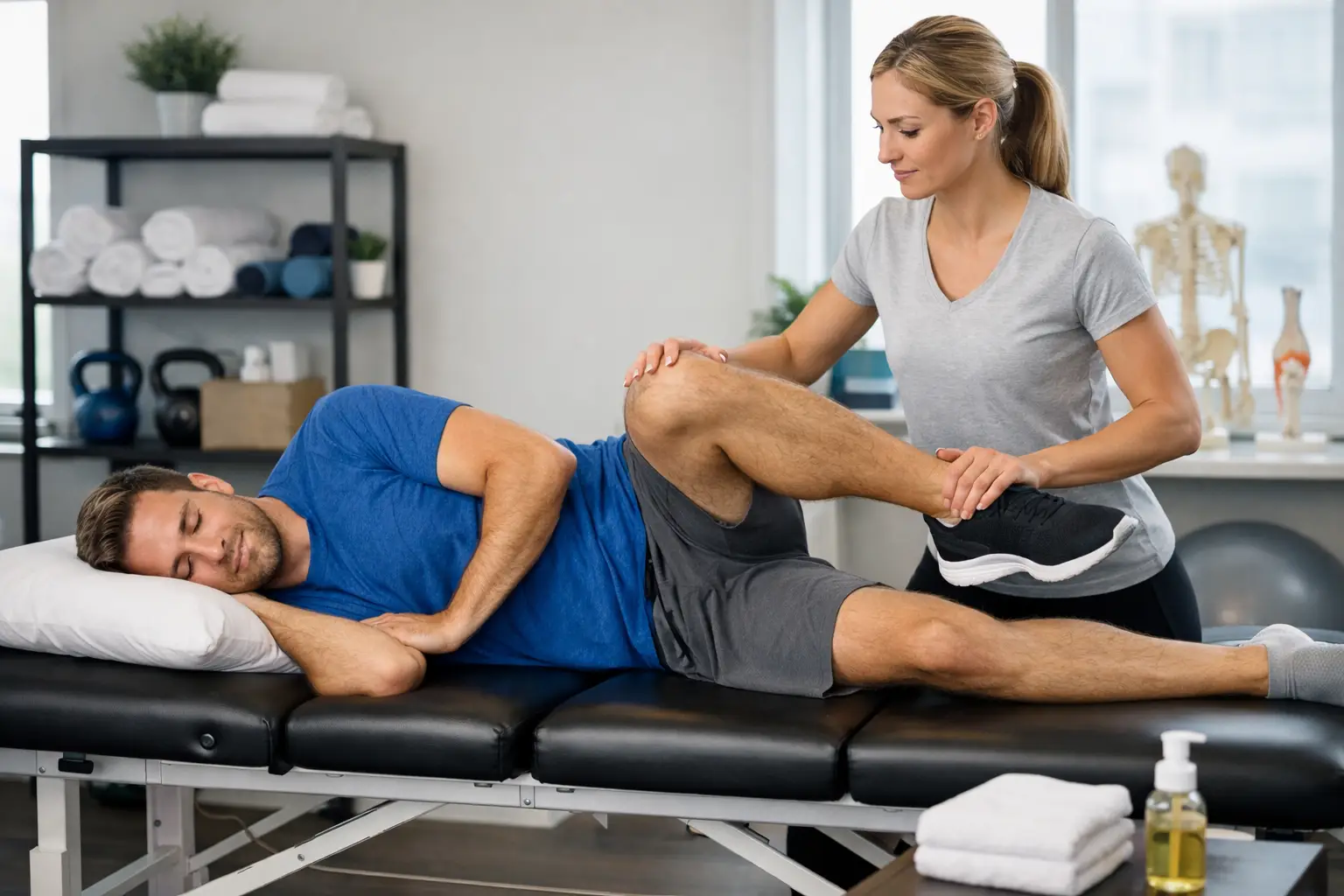
A hard training session can leave your legs heavy on the stairs, your hips tight during a squat, or your shoulders stiff before the next practice. Athletic recovery is not about avoiding effort. It is about giving your body the right conditions to settle muscular tension, restore comfortable movement, and return to training with greater awareness of what it needs.
For runners, soccer players, gym regulars, and people with physically demanding work in St. Catharines and across Niagara, recovery often gets pushed aside until discomfort becomes difficult to ignore. A thoughtful routine can make the space between sessions feel more manageable and help you maintain the mobility your sport or work requires.
What Athletic Recovery Actually Requires
Recovery is not one activity and it does not look identical for every athlete. A long-distance runner with sore calves after hill work may need something different from a soccer player with tight hip flexors after repeated sprints. Training volume, sleep, stress, previous injuries, work demands, and how your body responds to exercise all matter.
The goal is not to eliminate every trace of soreness. Some fatigue is a normal response to challenging your body. The more useful goal is to reduce excessive tightness, support circulation, maintain a comfortable range of motion, and notice patterns before they interfere with movement.
Start with the basics that happen between appointments
The most effective recovery habits are usually the least dramatic. Sleep gives your body time to adapt to training. Regular meals and enough fluids support energy, while light movement can prevent you from feeling locked up after a demanding workout. A short walk, easy cycling, or gentle mobility work may feel better than staying completely still.
Timing matters, too. If you have an important game tomorrow, a new and intense treatment may not be the best choice. Keep recovery work lighter and more familiar close to competition. After a major event or a hard training block, a longer massage session and a quieter day may be more appropriate.
Pay attention to changes that affect how you move, rather than judging recovery only by how sore you feel. Useful cues include:
- Stiffness that does not ease after a warm-up
- A reduced ability to reach, rotate, squat, or stride comfortably
- Tension that keeps returning in the same area
- Fatigue that makes your usual training form feel difficult to maintain
These signals do not automatically mean something is wrong, but they are worth respecting. Adjusting intensity, improving rest, or scheduling focused bodywork can be a sensible response.
How Massage Supports Athletic Recovery
Massage is not a replacement for rest, nutrition, progressive training, or professional care when needed. It can, however, be a valuable part of a recovery plan when muscular tightness, restricted movement, or accumulated physical stress are getting in the way of how you want to feel.
At Warin Thai Massage, sessions are tailored to the areas that need the most attention. Instead of using the same routine for every active client, Joy can focus on recurring tension in the calves, hamstrings, glutes, hips, lower back, shoulders, or neck while considering your recent activity and comfort level.
Traditional Thai massage for mobility and tension relief
Traditional Thai massage combines focused pressure with assisted stretching. Performed fully clothed on a raised table, it can be especially helpful for active people who feel tight through the hips, legs, back, or shoulders.
Assisted stretches allow the body to move through positions that may be difficult to access alone after a workout. The pace can be gentle and restorative or more focused, depending on your flexibility, training schedule, and sensitivity that day. The intention is not to force a deeper stretch. It is to help you feel more open, balanced, and comfortable in your movement.
For an athlete who spends hours running, cycling, lifting, or sitting at a desk between workouts, this approach can be useful for addressing the connected feeling of tension that travels from the feet and calves through the hips and lower back.
Swedish massage, oil massage, and hot stone options
Swedish and oil-based massage techniques are often a good fit when the body feels generally tired, sore, or overworked. Smooth, flowing work can encourage relaxation while focusing on areas carrying the most muscular tension. This can be a welcome choice after a demanding week when you want to slow down without adding strong stretching.
Hot stone massage may be particularly comforting when muscles feel guarded or when stress has added to physical tightness. Warm stones can help the body relax into the session, allowing focused work to feel more comfortable. It is a matter of preference and timing: some clients appreciate heat after training, while others prefer a fully clothed Thai session with more movement.
A Thai-Swedish combination treatment can offer both assisted stretching and calming massage work. This is often a practical option for someone who wants improved mobility but also needs time for the nervous system to settle after a busy work and training schedule.
When cupping may fit your session
Cupping can be included in a Thai combination oil massage for clients who enjoy a targeted approach to stubborn muscular tightness. It is commonly requested for areas such as the upper back, shoulders, legs, and hips. Because cupping can leave temporary marks and may not suit every person or every training day, it is best discussed before the session.
If you have an event, photos, or a competition coming up, mention it. A personalized plan should consider not only what feels tight, but also what you need to do afterward.
Build a Recovery Rhythm Around Your Training
Consistency is usually more helpful than waiting for a single, all-out recovery day. A massage schedule can be adjusted around your training cycle. During a high-volume period, some athletes prefer regular sessions that focus on maintaining comfort and range of motion. During a lighter period, there may be more room for a longer, deeper restorative session.
You do not need to be a competitive athlete to benefit from this approach. Recreational players, weekend hikers, active parents, and people whose jobs keep them on their feet can all experience the same patterns of tight hips, sore legs, and tense shoulders. Your body responds to total load, not just the name of your sport.
A useful question before booking is simple: what is making movement less comfortable right now? Maybe your squat feels restricted, your legs stay heavy after practice, or you cannot turn your head freely after long hours at a computer. Sharing that information gives your therapist a clear starting point.
Make the most of your massage appointment
Arrive with a general sense of your recent activity. Mention a new workout routine, a race, a tournament, a physically demanding work week, or any area that feels unusually sensitive. Clear communication helps the session stay within your comfort level and focus on the areas that matter most.
Afterward, give yourself a little room to absorb the session. Gentle movement, water, a nourishing meal, and a calmer evening can complement the work. There is no need to prove your toughness by scheduling another hard workout immediately after a recovery-focused appointment. How you feel the following day is useful feedback for planning the next session.
If pain is severe, follows a sudden injury, or comes with concerning symptoms, seek appropriate health care before treating it as ordinary training soreness. Massage is most helpful when it is part of a thoughtful response to your body, not a way to push through something that needs further attention.
Recovery Should Help You Keep Doing What You Love
The best recovery plan is one you can return to. It should fit your training, your work, and your real life, rather than adding another demanding task to your week. Some days that means a walk and an early bedtime. Other days, it means focused massage, assisted stretching, and time to reset the areas that work hardest for you.
When your body feels less restricted, it is easier to train with better form, enjoy your sport, and move through daily life with more comfort. Book Your Session at Warin Thai Massage and give your athletic recovery the personalized attention it deserves – so you can feel better, move better, and keep showing up for what matters to you.
Leave a Reply