 Skip to content
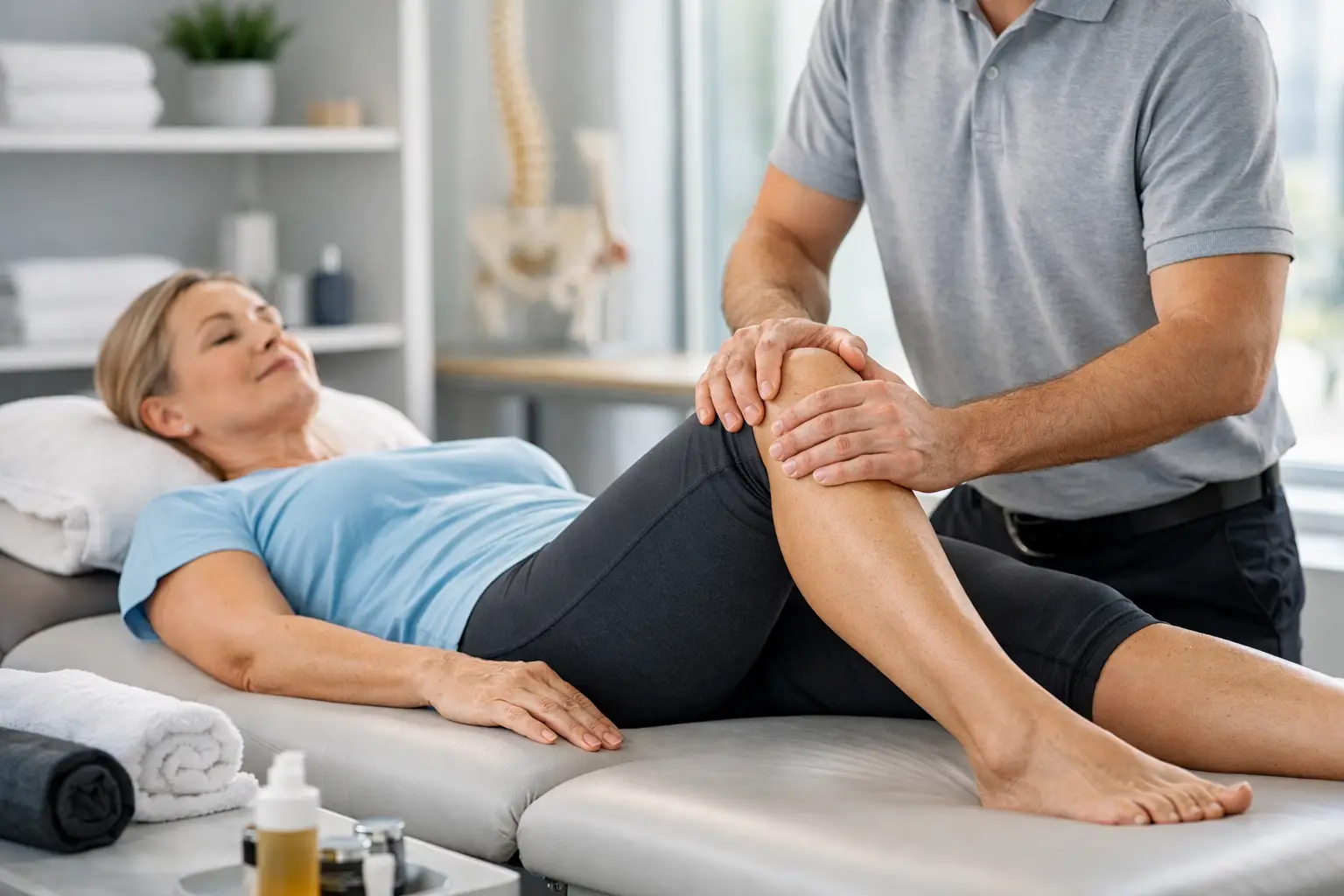
A stiff knee can make ordinary moments feel unexpectedly demanding. Getting up from a desk, walking downstairs, kneeling in the garden, or returning to a favorite workout may bring a sense of pulling, tightness, or resistance. Massage for knee stiffness can be a helpful way to address the tense muscles around the joint, improve how comfortably the leg moves, and give your body a chance to relax.
The knee itself is only one part of the picture. Tightness in the thighs, calves, hips, and even the feet can change how the knee feels during daily movement. A thoughtful massage session looks beyond one sore spot and focuses on the connected muscles that support comfortable motion.
Why Knee Stiffness Often Starts Beyond the Knee
The knee depends on the muscles above and below it for support. When the quadriceps at the front of the thigh are tight, they can create a pulling sensation around the kneecap. Tight hamstrings may make it harder to fully straighten the leg. Calf tension can affect the ankle’s movement, which may change the way you walk, squat, or climb stairs.
Long periods of sitting are a common contributor. Many working professionals spend hours with their knees bent beneath a desk or in a car, then feel stiff when they stand. Physically demanding work can have the opposite effect: repeated lifting, crouching, climbing, or standing may leave the legs feeling overworked by the end of the day.
Active people can experience stiffness after running, cycling, soccer, strength training, or a sudden increase in activity. This does not always mean something is seriously wrong. Sometimes the body is simply asking for recovery, circulation, and a more balanced approach to movement. Still, persistent or worsening discomfort deserves appropriate professional attention.
How Massage for Knee Stiffness Can Help
Massage is not about applying heavy pressure directly onto a stiff knee. In a skilled session, the focus is usually on the soft tissue surrounding it. Gentle, targeted work can help reduce the feeling of tightness in the quadriceps, hamstrings, calves, hips, and outer thigh.
As those muscles relax, many people notice that bending and straightening the leg feels easier. Massage can also support circulation in the surrounding tissues and reduce the protective muscle guarding that often appears when a body part has been uncomfortable for a while. The result may be a lighter, less restricted feeling when walking or changing positions.
The right pressure matters. If an area is sensitive, aggressive work can make the body tense up further. A good therapist adjusts pressure, pace, and technique based on what you feel during the session. The goal is not to force range of motion. It is to help your body move toward greater ease.
Thai Massage and Assisted Stretching
Traditional Thai massage can be especially useful when knee stiffness is connected to tight legs and hips. Performed fully clothed on a raised table, this style combines rhythmic pressure with supported, assisted stretches. Rather than asking you to push into a difficult position, the therapist helps guide the body gradually and comfortably.
For someone whose knee feels stiff after sitting, gentle leg and hip stretches may help release the muscles that have been held in one position all day. For an active client, Thai techniques can support recovery by addressing the full line of tension from the feet through the calves, thighs, and hips.
Every body responds differently. Some people prefer more stretching because their stiffness feels related to overall tightness. Others feel best with slower pressure work and minimal movement. A personalized approach makes that decision easier.
Swedish, Oil, Hot Stone, and Cupping Options
Swedish or oil massage can be a good choice when the legs feel generally sore, fatigued, or tight. Smooth, flowing techniques help encourage relaxation while allowing the therapist to spend focused time on the larger muscles around the knee.
Hot stone massage may feel particularly comforting when stiffness comes with a sense of heaviness in the legs. The warmth can help muscles soften before hands-on work begins. It is often a relaxing option for clients who carry tension throughout the lower body, not only at the knee.
Cupping may be included in a Thai combination oil massage when appropriate for the client and session goals. It can be used on larger surrounding muscle groups, such as the thighs or calves, to address areas that feel especially restricted. It is not necessary for every client, and it should never be treated as a one-size-fits-all solution.
What a Targeted Session May Include
A session for knee stiffness should begin with listening. Your therapist may ask when the stiffness is most noticeable, whether it affects one or both knees, what movements feel limited, and what your work or activity routine looks like. These details help shape the treatment.
The session may include focused work through the front and back of the thigh, the calves, the outer hip, and the muscles around the shin. Depending on your comfort level, it may also include gentle assisted stretching for the legs and hips. The exact combination depends on whether your body needs calming, deeper muscle work, improved flexibility, or a blend of all three.
You do not need to arrive knowing which massage style is best. Clear communication about what you feel and what you hope to improve is the useful starting point. A skilled therapist can help choose an approach that fits your comfort, mobility, and goals for the day.
Simple Habits That Support Easier Knee Movement
Massage can be part of a larger routine for managing stiffness. The most useful habits are usually simple enough to repeat consistently. Avoid staying in one position for too long when possible. If you work at a desk, stand up and take a short walk at regular intervals. If your job keeps you on your feet, give your legs opportunities to rest and recover.
Gentle movement is often more helpful than trying to push through discomfort. Easy walking, gradual warm-ups before exercise, and light stretching for the calves, thighs, and hips can support the benefits of bodywork. After a demanding workout or long shift, give your legs time to settle rather than immediately adding more intense activity.
Pay attention to patterns. Does stiffness appear after long drives, early in the morning, after a particular sport, or following a busy workweek? That information can help you and your therapist make better choices about where to focus.
When Massage Should Wait
Massage is not the right first step for every type of knee discomfort. Avoid massage and seek timely medical evaluation if you have sudden severe pain, major swelling, a visible change in the shape of the knee, inability to bear weight, fever, redness or unusual warmth around the joint, or symptoms that follow a significant fall or injury.
It is also wise to check with an appropriate health professional before booking if you have been advised to avoid massage, have a recent procedure, or are managing a condition that affects circulation or sensation. A massage therapist can work within your comfort and wellness goals, but should not replace needed medical care.
For everyday muscle tightness, however, personalized bodywork can be a calming and practical part of feeling better in your legs. At Warin Thai Massage in St. Catharines, Joy takes time to understand where stiffness is affecting your movement and adapts each session with attentive Thai, Swedish, oil, hot stone, or cupping techniques as appropriate.
If your knee stiffness is making walks, workouts, workdays, or stairs less comfortable, Book Your Session online. A focused massage can help you feel better, move better, and return to the activities that make your day feel like your own.
Leave a Reply