 Skip to content
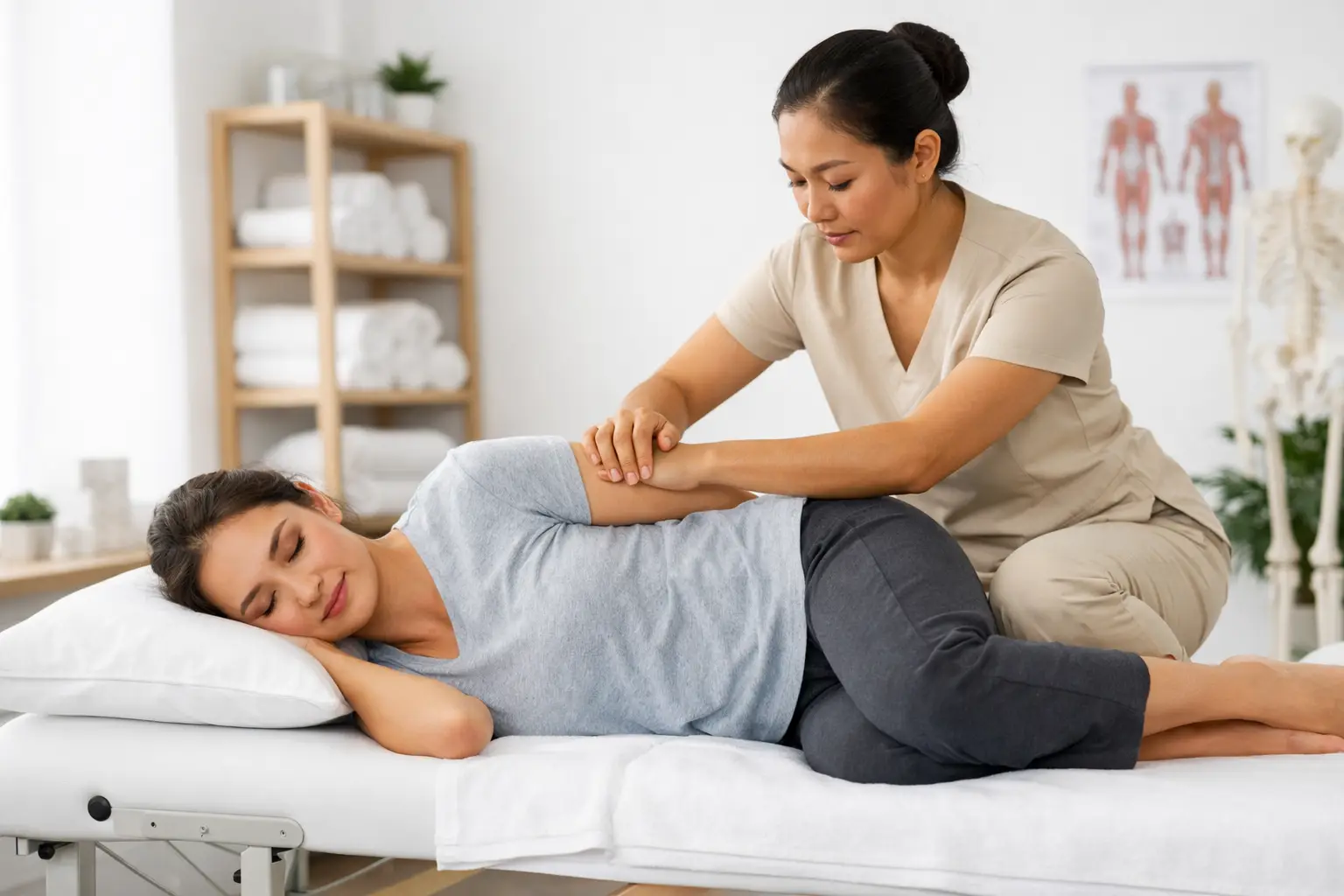
A tight neck that returns after every workday, hips that feel restricted on a walk, or legs that stay heavy after training often need more than a quick rub on the sore spot. Thai massage acupressure combines steady, purposeful pressure with guided movement to address areas that feel overworked, stiff, or out of balance.
This traditional hands-on approach is especially helpful for people who want to feel looser and move more freely without an overly passive massage experience. Your session is adjusted to your comfort, your goals, and the way your body feels that day.
What Is Thai Massage Acupressure?
Thai massage acupressure is a central part of traditional Thai bodywork. Rather than using only broad strokes over the muscles, the therapist applies controlled pressure with hands, thumbs, palms, forearms, elbows, or feet to specific areas of tightness. This work is paired with assisted stretches and gentle joint movements.
Traditional Thai massage is typically performed fully clothed on a raised massage table. Comfortable, flexible clothing lets you move easily while the therapist guides your arms, legs, hips, and shoulders through positions that encourage a greater sense of space and ease.
The pressure is never meant to feel like something you simply have to endure. Productive pressure may feel intense in a tight area, but it should remain manageable. A skilled therapist checks in, adjusts their approach, and works at a level that supports release rather than causing you to brace against the treatment.
How Focused Pressure Can Help Your Body Feel Better
Long hours at a desk can leave the chest and shoulders rounded forward while the neck works overtime. Physical jobs can create fatigue through the low back, forearms, legs, and feet. Sports and regular exercise may leave the hips, hamstrings, calves, or knees feeling tight after repeated movement.
Focused pressure can help soften guarded muscles and bring attention to the surrounding areas that may be contributing to discomfort. For example, persistent shoulder tension is not always just a shoulder issue. The upper back, chest, neck, and even the way the arm moves can all influence how that area feels.
Thai techniques are useful because they look at these relationships. Instead of working one small spot in isolation, a session can connect pressure work with stretching and movement through a larger area of the body. Clients often choose this style when they want support for muscle tension, circulation, flexibility, posture, and day-to-day mobility.
Results vary from person to person. Some people feel an immediate sense of lightness after one session, while recurring tightness related to work, training, stress, or movement habits may respond best to regular care. The goal is not to force your body into a result. It is to help it relax, move, and recover more comfortably.
Thai Massage Acupressure and Assisted Stretching
Pressure is only one part of the experience. Assisted stretching gives Thai massage its distinct, active quality. Your therapist supports your body as they guide a limb or joint through a comfortable range of motion. You do not need to be flexible to benefit from it.
For tight hips and legs, the therapist may use careful stretches that involve the glutes, hamstrings, inner thighs, calves, and lower back. For upper-body tension, gentle movements may help open the chest and encourage easier movement through the shoulders and upper back.
The combination matters. Pressure can help an area settle before a stretch, while stretching can help the body use that renewed ease in motion. This is one reason Thai massage is popular with active clients, people who stand for long shifts, and anyone who feels stiff after sitting for most of the day.
At the same time, more stretching is not always better. If you are very sore after a workout, have limited mobility, or simply prefer a quieter session, the treatment can use less movement and more calming pressure work. Personalization is what makes the session effective.
What a Session May Focus On
A Thai massage session can be full-body, targeted, or a blend of both. Your therapist will ask about the areas that feel most important and how you would like to feel when you leave. That conversation helps shape the pressure, pace, and techniques used.
For desk-related tension, the focus may include the neck, shoulders, upper back, arms, hands, chest, hips, and low back. For physically demanding work, attention may shift toward the back, forearms, legs, and feet. For sports recovery, the session may concentrate on the hips, glutes, thighs, calves, and the mobility needed for your activity.
It is also common for clients to arrive with one painful area but discover that nearby muscles are working hard to compensate. Addressing connected areas can create a more balanced result than repeatedly pressing on the most tender point alone.
When Thai Acupressure May Be a Good Fit
Thai bodywork may suit you if you prefer a massage that includes stretching, targeted pressure, and a sense of active participation. It can be a strong choice when stiffness is affecting your daily comfort, when your muscles feel dense after activity, or when you want a more movement-focused alternative to a traditional oil massage.
A different approach may be better if you want uninterrupted relaxation with oil-based gliding strokes, have skin sensitivity, or do not feel comfortable with assisted stretches. In that case, Swedish oil massage, hot stone massage, or a Thai-Swedish combination may offer a better match. A combination session can be particularly useful when you want focused Thai techniques in a few areas but also want the calming feel of oil massage.
Always share relevant comfort concerns, recent injuries, movement limitations, pregnancy, or health considerations before your session. This allows the therapist to modify positions and pressure so the treatment feels appropriate for you.
Preparing for Your Appointment
Wear loose clothing that allows you to bend your knees, lift your arms, and move comfortably. Avoid a heavy meal immediately before your session, and give yourself a little time afterward rather than rushing straight into a demanding activity.
During the massage, simple feedback is valuable. Let your therapist know if the pressure is too strong, if a stretch feels restricted, or if a particular area needs more attention. Massage is most helpful when it is a conversation, not something done without your input.
Afterward, many clients notice they feel relaxed, more open through the hips or shoulders, and more aware of where they hold tension. Drinking water, taking an easy walk, and avoiding an unusually intense workout right away can help you enjoy that calmer feeling. Mild tenderness can happen after deeper work, especially when muscles have been tight for a long time, but the treatment should not leave you feeling sharply painful or overwhelmed.
Personalized Thai Massage in St. Catharines
At Warin Thai Massage, each appointment begins with listening. Whether you are dealing with persistent shoulder tension, tight hips, tired legs, or a recovery-focused goal, the session can be adapted with traditional Thai pressure, assisted stretching, and complementary techniques when appropriate.
You do not have to wait until stiffness becomes your normal. Book Your Session online and give your body dedicated time to feel better, move better, and return to the activities that matter to you.
Leave a Reply