 Skip to content
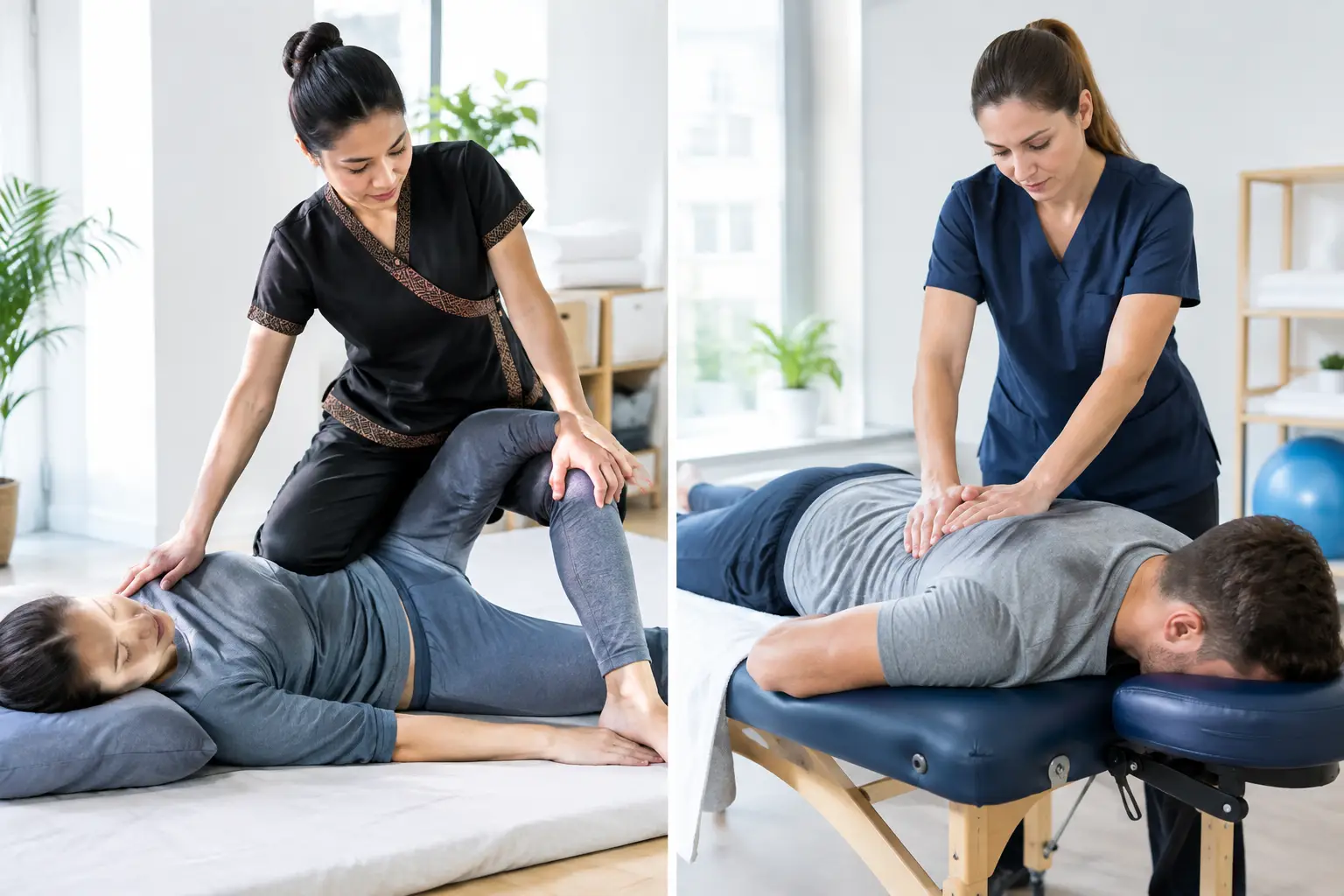
A tight neck after a week at the desk may call for a very different massage experience than sore hips after soccer practice or heavy legs after a long shift. When comparing Thai massage versus Swedish massage, the best choice comes down to how you want to feel during the session and what your body needs afterward: calmer muscles, freer movement, focused pressure, or a combination of all three.
Both treatments can ease everyday muscle tension and help you relax. The difference is in the approach. Thai massage uses rhythmic pressure and assisted stretching to encourage mobility, while Swedish massage uses gliding strokes and kneading with oil or lotion to soothe tense tissues and settle the nervous system.
Thai Massage Versus Swedish Massage: The Main Difference
Traditional Thai massage is an active, movement-based style of bodywork. You remain fully clothed in comfortable, flexible clothing while the therapist uses hands, thumbs, forearms, elbows, and carefully applied body weight to work along the muscles. Assisted stretches are woven throughout the treatment, helping areas such as the hips, legs, back, shoulders, and chest move more freely.
Swedish massage is generally a more still and oil-based experience. You lie on the massage table under professional draping while the therapist uses long flowing strokes, kneading, circular friction, and targeted pressure. The goal is to warm the soft tissues, support circulation, reduce the feeling of muscle tightness, and create deep relaxation.
Neither style is automatically better. Thai massage can feel especially useful when stiffness and limited range of motion are your main concerns. Swedish massage may be the better fit when you want to switch off, rest deeply, and receive direct work on tight muscles without the stretching component.
What a Traditional Thai Massage Session Feels Like
Thai massage is sometimes described as assisted stretching, but that only tells part of the story. A well-paced session is not about forcing the body into positions. It is about meeting your current mobility level with steady pressure, supported movement, and time for muscles to respond.
At Warin Thai Massage, traditional Thai techniques are performed fully clothed on a raised table. This allows the therapist to work with a broad range of clients comfortably, from desk workers with rounded shoulders to active people managing tight quads, calves, hips, or lower-back tension.
You may spend parts of the session lying on your back, stomach, or side. The therapist might guide one leg through a gentle hip stretch, open the chest and shoulders, or use firm palm and thumb pressure around the upper back and glutes. Communication matters throughout. Pressure and stretch intensity can be adjusted so the session feels productive without becoming overwhelming.
Thai massage may suit you if you want to:
- Improve flexibility and comfortable range of motion
- Address stiffness from sitting, driving, repetitive work, or training
- Feel more open through the hips, shoulders, and legs
- Receive focused pressure without massage oil
- Stay comfortably dressed during your session
Thai massage can be invigorating as well as relaxing. Many clients leave feeling lighter and looser, with a noticeable sense that their posture and movement have improved. Others prefer a quieter, more restful experience, which is where Swedish massage or a combination treatment may be a stronger match.
What a Swedish Massage Session Feels Like
Swedish massage uses oil or lotion to allow the therapist’s hands to move smoothly across the skin and muscles. The flowing pace can make it easier to relax from the beginning, particularly if your body feels worn down, your shoulders feel heavy, or you simply need time away from a demanding routine.
The session often starts with broad, warming strokes before moving into more focused kneading and pressure where tension is most noticeable. For example, a therapist may spend extra time through the neck, upper back, and shoulders for someone who works at a computer, or focus on the calves and thighs after strenuous physical activity.
Swedish massage pressure is flexible. It does not have to be very light, and it does not have to be intensely deep to be effective. A skilled therapist can use moderate to firm pressure where appropriate while maintaining a smooth, calming rhythm. The right level is one that feels useful and manageable for your body that day.
This style is often a good choice for first-time massage clients because it is familiar, straightforward, and easy to personalize. It is also well suited to anyone who wants to prioritize relaxation while still receiving targeted attention to sore, overworked areas.
Comparing Pressure, Stretching, and Relaxation
The clearest comparison is simple: Thai massage asks your body to participate through supported movement, while Swedish massage allows you to rest while the therapist works through the muscles.
Thai massage uses pressure in a rhythmic, deliberate way. It may feel firm around areas of long-held tightness, but the session also includes pauses, stretches, and changes of position. Because the work reaches beyond one isolated spot, it can be a useful option when tension seems connected across the body – such as tight hips contributing to tired legs or chest tightness accompanying shoulder discomfort.
Swedish massage is more continuous and soothing. The use of oil supports long strokes across larger muscle groups, making it especially comforting for general tension and fatigue. If you are feeling stressed, run down, or sensitive to stretching, Swedish massage can provide a gentler path toward relief.
Your preference can also change from one appointment to the next. A runner may want Thai stretching after a training block, then choose Swedish oil massage during a period when rest and recovery feel more important. Listening to that difference is part of choosing a massage that serves you well.
When a Thai-Swedish Combination Makes Sense
You do not always have to choose one approach. A Thai combination Swedish massage blends the mobility-focused benefits of Thai stretching and acupressure-style pressure with the calming, muscle-soothing qualities of Swedish oil massage.
This can be a thoughtful option if you have both specific tight areas and a strong need to unwind. Your therapist may begin with Swedish techniques to warm and relax the muscles, then add supported stretches and focused Thai work where your hips, back, shoulders, or legs need more attention. The exact balance can be adjusted to your comfort level and goals.
For clients in St. Catharines and across the Niagara region, this combination is often appealing after long workdays, physically demanding jobs, or sports activity. It offers a fuller session without treating every body the same way.
How to Choose the Right Massage for Your Body
Start with the question, “What is bothering me most right now?” If your answer is stiffness, reduced mobility, tight hips, or a body that feels restricted after sitting or training, Thai massage may be the natural choice. Wear clothing you can move in and be ready for gentle, therapist-guided stretching.
If your answer is stress, general soreness, tired muscles, or a desire to rest deeply, Swedish massage may fit better. The soothing strokes and oil-based work can help you settle into the table while your therapist concentrates on the areas carrying the most tension.
If you want both mobility work and relaxation, choose a Thai-Swedish combination. It is also a practical choice when you are unsure where to start. Let your therapist know about your daily routine, activity level, pressure preferences, and any areas that feel particularly sensitive or restricted. Clear feedback helps shape the session around you.
A good massage should not feel like a test of how much pressure you can tolerate. Productive work can be firm, but it should remain respectful of your comfort and leave you feeling cared for. If you have a health concern, recent injury, or are unsure whether massage is appropriate, check with a qualified health professional before booking.
Choose the Session That Helps You Move Better
Thai massage and Swedish massage offer different routes to the same valuable goal: feeling more comfortable in your body. One emphasizes assisted stretching and rhythmic pressure; the other emphasizes flowing touch and deep relaxation. The right fit is the one that matches your energy, tension patterns, and goals on the day of your appointment.
If you are ready for personalized bodywork that meets you where you are, book your session online with Warin Thai Massage. Whether you choose traditional Thai massage, Swedish oil massage, or a tailored combination, you can feel better, move better, and get back to the activities that matter to you.
Leave a Reply