 Skip to content

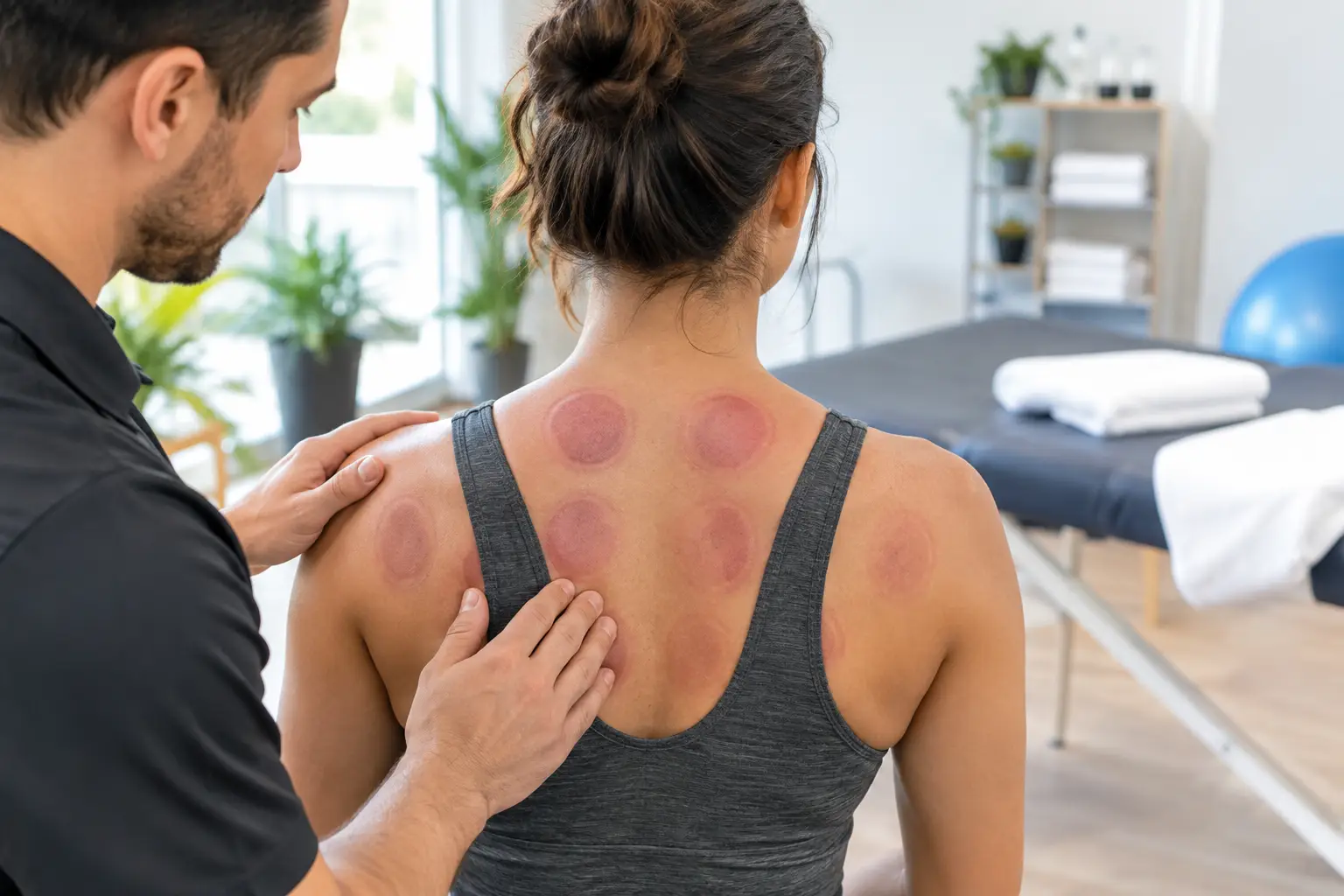
Those circular marks after a cupping session can be surprising the first time you see them. This cupping marks aftercare guide explains what the marks mean, how to keep the area comfortable, and when to give your body a little extra rest. For many clients, cupping is a helpful addition to massage when tight shoulders, a stiff back, sore legs, or post-workout tension need focused attention.
Cupping uses gentle suction to lift the skin and underlying soft tissue. Unlike the pressure of a massage stroke, this creates a pulling sensation that can feel relieving in areas that are especially tight. The visible circles left behind are a normal response to that suction. They are not a sign that anything has been “released” from the body, and they should not be treated as a badge of how intense the session was.
What Cupping Marks Usually Look and Feel Like
Cupping marks often range from light pink to deep red, purple, or brown, depending on your skin tone, the amount of suction used, and how much tension was present in the area. They can resemble round bruises, but they form through a different type of pressure than an impact injury.
A mark may feel mildly tender, warm, or sensitive when clothing rubs against it. Some people feel no discomfort at all. The color can look more noticeable during the first day or two, then gradually fade. Most marks resolve within several days to about two weeks, although timing varies from person to person.
The goal of a skilled cupping massage session is never to leave the darkest possible marks. Your comfort, skin sensitivity, activity level, and treatment goals all matter. A lighter approach may be better when you are new to cupping, have an important event coming up, or simply prefer a gentler session.
Cupping Marks Aftercare Guide: The First 24 Hours
The first day is a good time to stay kind to the treated area. Your body has just received focused hands-on work, so think in terms of comfort rather than pushing through discomfort.
Keep the skin clean and dry, and choose loose, breathable clothing when possible. A tight waistband, backpack strap, or fitted athletic gear can irritate marks on the back, shoulders, or hips. If the area feels tender, avoid pressing or repeatedly checking the marks throughout the day.
Warmth is often comfortable after cupping, but avoid extreme heat during the first 24 hours. Skip very hot showers, saunas, steam rooms, and hot tubs, especially if your skin feels sensitive. Lukewarm water is a better choice. If you take a shower, pat the area dry rather than rubbing it vigorously with a towel.
Drink water regularly as you normally would. Hydration supports your general recovery after massage and can be especially welcome if you have been active, working long hours at a desk, or spending the day on your feet. There is no need to force excessive amounts of water, but keeping a bottle nearby is an easy habit.
It is also wise to give hard training a brief pause if you feel sore or unusually tired. A gentle walk, easy mobility work, or relaxed stretching can feel good. Heavy lifting, intense interval training, or a demanding soccer practice may be better saved for the next day, depending on how your body feels.
How to Soothe Tender Skin
Mild tenderness generally settles on its own. If the area is sensitive, choose simple measures that do not create more irritation. Wear soft fabrics, avoid exfoliating products on the marks, and do not scrub them with a brush or massage tool.
A cool compress wrapped in a cloth may feel soothing if the skin feels warm or tender. Keep it brief and gentle. Do not place ice directly on your skin, and do not use strong topical products, essential oils, or heavily scented lotions on freshly treated areas unless you already know your skin tolerates them well.
Some people prefer a warm, not hot, compress after the initial sensitivity has passed. It depends on what feels better for you. The key is to avoid anything that increases redness, stinging, or discomfort.
You do not need to massage the circles at home to make them disappear faster. Let the skin recover naturally. A lighter mark does not mean the session was ineffective, and a darker one does not mean you received a better treatment.
What to Avoid While Marks Fade
Cupping marks do not require complicated care, but a few temporary adjustments can make recovery more comfortable. Avoid direct sun exposure on the marks when possible. If the area will be exposed outdoors, cover it with clothing or use appropriate sun protection once the skin is calm and intact. Sun exposure can make discoloration more noticeable and longer lasting.
Try not to schedule another cupping session over the same marked area until it has had time to recover. Your therapist can work around it, use a different technique, or adjust the session based on your needs. This is particularly useful if you receive regular massage for recurring neck, shoulder, back, hip, or leg tension.
Avoid picking at the skin or using exfoliating treatments to fade the circles. The marks are not surface stains, so scrubbing will not remove them. It may only leave the skin irritated.
If you are planning photos, a beach day, a wedding, or another event where you would rather not have visible marks, mention it before your appointment. Cupping can be adjusted, placed in less visible areas, or skipped entirely in favor of other massage techniques.
When Marks May Need Extra Attention
Normal cupping marks should gradually improve, not become increasingly painful. Stop using irritating products and seek prompt care if you notice blistering, broken skin, spreading redness, significant swelling, severe pain, numbness, or signs of an allergic reaction.
Before booking cupping, tell your therapist about skin sensitivity, easy bruising, current injuries, recent surgery, medications that affect bleeding or bruising, or any condition that affects your skin or circulation. Cupping is not the right choice for every person or every area of the body. An open conversation helps your therapist select an approach that fits your comfort and goals.
If you are unsure whether a mark is a typical post-cupping response, take note of when it appeared, how it feels, and whether it is improving. That information is useful when you speak with a qualified health professional or your therapist.
Make Your Next Cupping Session More Comfortable
Good aftercare starts before the cups are placed. Let your therapist know whether you have had cupping before and how your skin responded. Share whether you want help with post-workout recovery, desk-related shoulder tension, lower-back tightness, or restricted movement through the hips and legs.
A personalized session allows the pressure and placement to match what your body can comfortably handle. At Warin Thai Massage in St. Catharines, Joy can combine cupping with Thai stretching, Swedish massage, or oil massage techniques based on the areas that need focused care. The treatment should feel purposeful and calming, not like something you need to endure.
Visible circles can be part of a cupping session, but they should never distract from the reason you came in: to feel more comfortable in your body and move with greater ease. Give yourself a quiet evening, wear comfortable clothing, and let the marks fade at their own pace.
Ready for personalized bodywork that respects your comfort and recovery? Book Your Session online and let us help you feel better, move better, and live better.
Leave a Reply